Why your child's water bottle is the real MVP of the day
Tamika Tembo, Health promotion student
Between cut up sandwiches, crunchy veg sticks and a piece of fruit, always remember to pack a water bottle. Although it might seem like an afterthought, water is just as important as the food your child is eating.
Children’s bodies are made up of mostly water. This is why staying hydrated plays a big role in how they learn, play and feel throughout the day.
What types of drinks should my child have?
Remember, not all drinks are created equally. Water is the gold standard for hydrating your child and despite fruit juices, sports drinks and soft drinks being popular, the best option is water. Sports drinks can be useful after very sustained bouts of exercise, but for most children, they are simply not needed. Plus, they are full of added sugars. See our blog on sports drinks for more information.
What happens if children don’t drink enough water?
Children lose water from breathing, sweating and going to the toilet. These activities use up stored water, and if they don’t drink enough water to replace what is lost, especially on those hot days, children can become dehydrated.
When your child is dehydrated, it can lead to:
 |
 |
 |
Headache |
Difficulty concentrating |
Irritability |
Key point:
Hydration is not just about thirst, by the time your children feel thirsty they’re already behind on fluids, which is why having water readily available and having lots of water breaks throughout the day is important.
How much should my child be drinking?
Every day, it is recommended that children drink around 5 cups of water. The table below shows how much water your child should aim to drink daily depending on their age.
4-8 years old |
1.2L (5 cups) |
9-13 years old |
1.5L (5-6 cups) |
14-18 years old |
1.8L (6-8 cups) |
This table is a guide. On hot days, active days and days when your child is feeling sick, they may need more water.
How can I get my child to drink more water?
1. Make drinking water more fun!
Choose a colorful water bottle together because if they love the bottle, then they’re more likely to use it. Put some lemon or orange slices, mint, cucumber or strawberries inside their water for a summery twist. Freeze the water bottle overnight or put some ice cubes inside to make sure the water stays cool and fresh throughout the day (especially on hot days).
2. Be a role model
Make sure you drink water in front of them, bring a water bottle with you when you go out and choose water instead of other drinks on offer. When your child sees you modelling healthy habits, they’re more likely to follow suit.
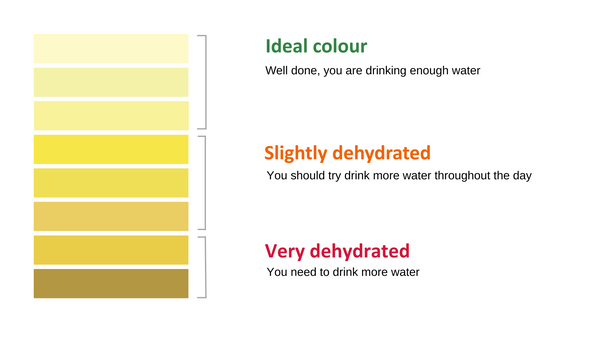
How to know if your child is well hydrated?
An easy way to check your child’s hydration is by the colour of their wee. Get your child to do the ‘wee check’ and see if their urine is the ‘ideal colour’ to make sure they’re drinking enough water.