Food scanning apps: How do they work?
Have you ever used an app to help you shop for food? Popular apps such as FoodSwitch and Yuka are designed to help shoppers find healthier options at the supermarket. Let’s compare these two common apps and discover how they calculate the ratings for food products and how this might impact what we buy.
The FoodSwitch and Yuka apps are designed to provide shoppers with instant product classification information. After scanning the barcode, the product is given a rating that determines how ‘healthy’ it is. Along with this, a list of similar ‘healthier’ options to the one you scanned may be provided.
How is the rating calculated?

FoodSwitch, created in 2012, uses the Health Star Rating (HSR) system (Behind the stars: How to interpret the Health Star Ratings on food packaging) which gives packaged foods a score between 0.5 to five stars. Five stars means the product is considered the healthiest option for the category. The HSR looks at both nutrients of concern (such as energy, saturated fat, sodium and total sugar) and helpful nutrients (such as protein, fibre and the fruit, vegetable, nut and legume content) in giving star ratings.
Yuka was founded in France in 2017 and uses a 100-point system, which is based on three factors:
- 60 per cent is calculated using Nutri-Score, a European nutritional rating system.
- 30 per cent is calculated based on the presence and use of additives that may be considered high risk.
- 10 per cent is accredited if the food is certified organic.
The Nutri-Score system is similar to the HSR system as both positive nutrients and nutrients of concern are considered in the score. Yuka states that its assessment of additives is based on independent studies and recommendations made by the European Food Safety Authority and the International Agency for Research on Cancer.
Pros and cons

FoodSwitch is free and easy to use. The app lets you to filter results based on nutrients like salt, energy, fat or sugar. FoodSwitch is especially relevant for Australian consumers as it uses the HSR system.
Yuka is also free and easy to use and includes photos of the recommended products making it quick and easy to identify these options when shopping.
Both apps do have limitations to consider.
The HSR system used by FoodSwitch is limited to food categories. This means you cannot compare across different food categories (e.g. muesli bar vs. yoghurt). FoodSwitch may also display recommended food products with both higher and lower HSR results, which may be confusing if you are looking for healthier options. Ideally just the products with a higher HSR are displayed.
Yuka doesn’t explain why additives make up 30 per cent of a product’s score or why certified organic foods make up 10 per cent. It also uses colour coding and associated words. Green foods = ‘excellent’ or ‘good’, amber foods = ‘poor’ and red foods = ‘bad’. For some people, seeing a low rating or the word ‘bad’ may lead to feelings of guilt or shame when choosing to eat those foods.
How does this effect what we buy?
Both FoodSwitch and Yuka tend to rate foods higher when they are lower in fat, sugar, sodium and overall energy, which is useful as limiting those nutrients can be beneficial. However, the apps only compare and recommend ‘healthier’ food options amongst packaged or processed items. The algorithms do not recommend a carrot or an apple as a snack in place of a muesli bar or chips. So while they may help you buy healthier packaged foods, they’re not designed to encourage more whole, unprocessed foods.
Because of how Yuka’s algorithm works, it may encourage consumers to buy more additive-free or organic options, which can be more expensive without providing much extra health benefit.
Label reading without an app
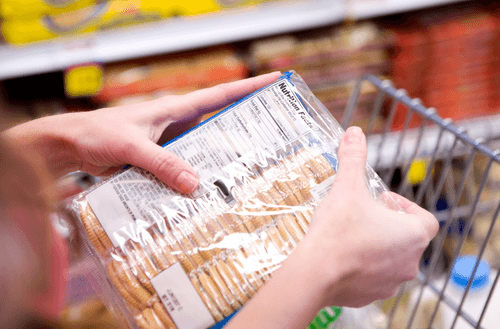 The alternative to using barcode scanning apps is to read the label yourself. We have a great blog on how to read food labels here. It may seem daunting at first, but this is a valuable skill and one that gets easier over time.
Finally, food choices are more than just energy and nutrients. Aim for a wide variety of foods you enjoy, that suit your budget, lifestyle and culture. Our health will benefit if the shopping basket is mostly full of unprocessed foods from the core food groups, with only a small ‘sprinkle’ of processed, packaged foods.